

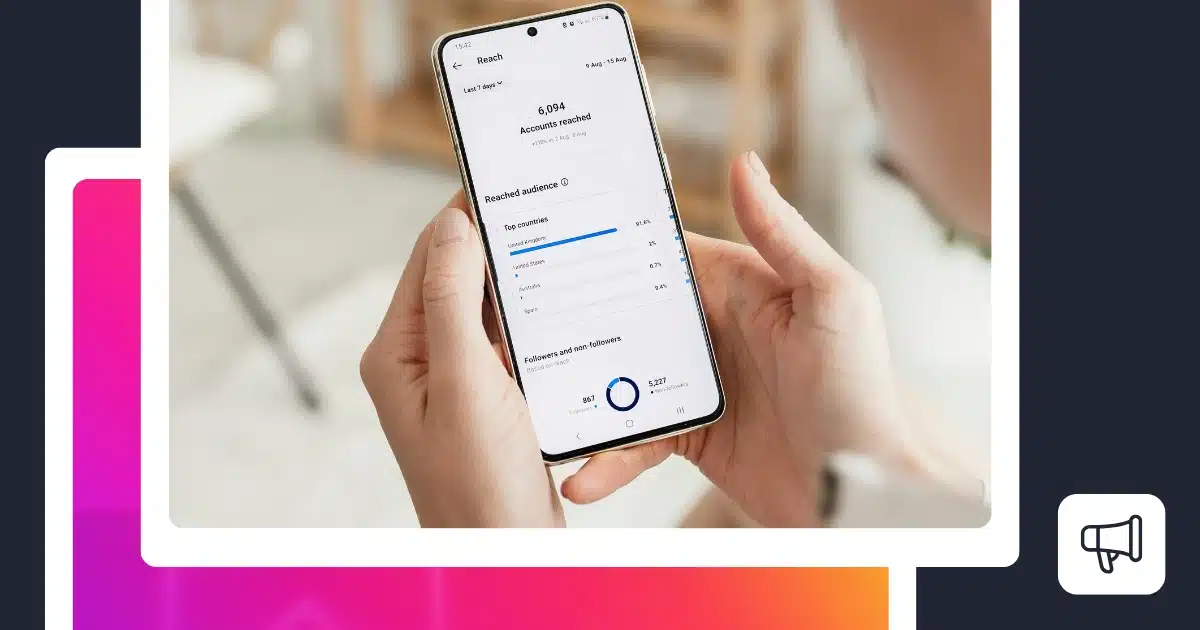
Instagram analytics contain several numbers that look similar at first glance. Reach and impressions are two of the most commonly misunderstood. People often see a large number under one metric and assume it automatically means the content performed well.
It is more useful to understand what each number represents and how the two metrics work together.
What Is Reach?
Reach generally refers to the number of unique accounts that saw your content.
Imagine your Reel reaches 5,000 accounts.
That means approximately 5,000 individual accounts were exposed to it.
Now imagine the same Reel receives 8,000 impressions.
The difference suggests that some accounts saw the content more than once.
This is why reach and impressions should not automatically have the same number.
What Are Impressions?
Impressions are generally concerned with the number of times content was displayed.
One person may see the same piece of content several times.
For example:
- Person A sees your post once
- Person B sees it twice
- Person C sees it three times
That creates more impressions than unique people.
This distinction becomes particularly useful when analyzing content that people revisit or encounter repeatedly.
Why Both Numbers Matter
Reach helps answer:
How many unique accounts did I reach?
Impressions help answer:
How many times was the content displayed?
Together, they provide a better understanding of exposure.
Suppose you have:
Reach: 4,000
Impressions: 7,000
Your content received more total exposures than unique accounts.
That could mean some people encountered it more than once.
This is not automatically good or bad. You need to look at what happened afterward.
Connect Reach With Engagement
Reach becomes more useful when combined with engagement.
Suppose two posts both reach 10,000 accounts.
Post A receives:
- 500 likes
- 80 shares
- 100 saves
- 30 comments
Post B receives:
- 150 likes
- 10 shares
- 15 saves
- 5 comments
The reach is identical, but the audience response is very different.
This tells you that exposure alone does not explain content performance.
A post needs context.
Reach From Followers and Non-Followers
Another useful question is where your reach is coming from.
A post can primarily reach existing followers, or it can reach a large number of people who do not already follow the account.
For creators trying to grow, non-follower discovery can be particularly interesting.
For example, a small cooking account publishes a Reel about a quick breakfast recipe.
The account has 2,000 followers.
The Reel reaches 25,000 accounts.
That suggests the content travelled well beyond the existing follower base.
Now the creator can investigate what caused that wider exposure.
Maybe the recipe was highly shareable.
Maybe the topic had broad appeal.
Maybe the opening was strong.
Maybe people were searching for that type of information.
Impressions Can Help Explain Repeated Exposure
Suppose a product announcement receives 5,000 reach and 9,000 impressions.
That repeated exposure may be useful for a campaign where familiarity matters.
A customer may see the announcement more than once before deciding to investigate the product.
But repeated exposure is not automatically proof that people are interested.
Always look at other signals such as:
- Profile visits
- Shares
- Saves
- Comments
- Follows
- Messages
- Website actions where applicable
These metrics provide additional context.
Compare Posts Over Time
Do not compare today’s numbers with yesterday’s numbers too quickly.
A post may continue gaining reach after several hours or days.
Instead, create a regular comparison system.
For example, review posts after similar periods.
You could compare:
- First 24 hours
- First 48 hours
- First seven days
The exact timeframe should be consistent.
This makes the comparison more useful.
A Real World Example
Imagine a travel creator has three Reels.
Reel 1
Reach: 6,000
Impressions: 7,500
Shares: 40
Reel 2
Reach: 15,000
Impressions: 17,000
Shares: 300
Reel 3
Reach: 8,000
Impressions: 12,000
Shares: 250
Reel 2 clearly travelled further.
But Reel 3 is also interesting because its number of shares is strong relative to its reach.
The creator should investigate both.
Maybe Reel 2 had a broader topic, while Reel 3 answered a very specific question.
That difference can help with future content planning.
Avoid Vanity Metric Thinking
Vanity metrics are numbers that look impressive but do not necessarily tell you whether your actual goal was achieved.
A huge impression number can look exciting.
But if your goal is gaining relevant followers, you should also look at follower growth and profile visits.
If your goal is customer inquiries, look at actions connected with that goal.
If your goal is awareness, reach may deserve more attention.
The metric should match the purpose.
Create a Simple Reach and Impressions Report
Once a week, record:
- Post name
- Format
- Reach
- Impressions
- Likes
- Comments
- Saves
- Shares
- Profile visits
- Follows
After several weeks, patterns become easier to see.
Maybe educational content has high saves.
Maybe entertaining Reels have high reach.
Maybe product posts generate more profile activity.
That is much more useful than staring at one large number.
The Practical Lesson
Reach and impressions answer different questions.
Reach helps you understand the size of the unique audience exposed to your content.
Impressions help you understand the total number of times content was displayed.
Neither metric tells the entire story.
The real value comes from connecting exposure with behavior.
When you see a post with high reach, ask what happened next.
Did people share it?
Did they save it?
Did they visit your profile?
Did they follow?
Did they come back?
That is where the numbers start becoming useful. Analytics should not simply tell you how many people saw your content. They should help you understand what those people did after seeing it, and that information can guide your next move.